
EV charging adapter safety & certification guide (UAE)
What a charging adapter can and cannot do safely — why passive plugs are AC-only, which certification marks matter, and how to check your own car's inlet before you buy.
Updated June 2026 · by EV Destination
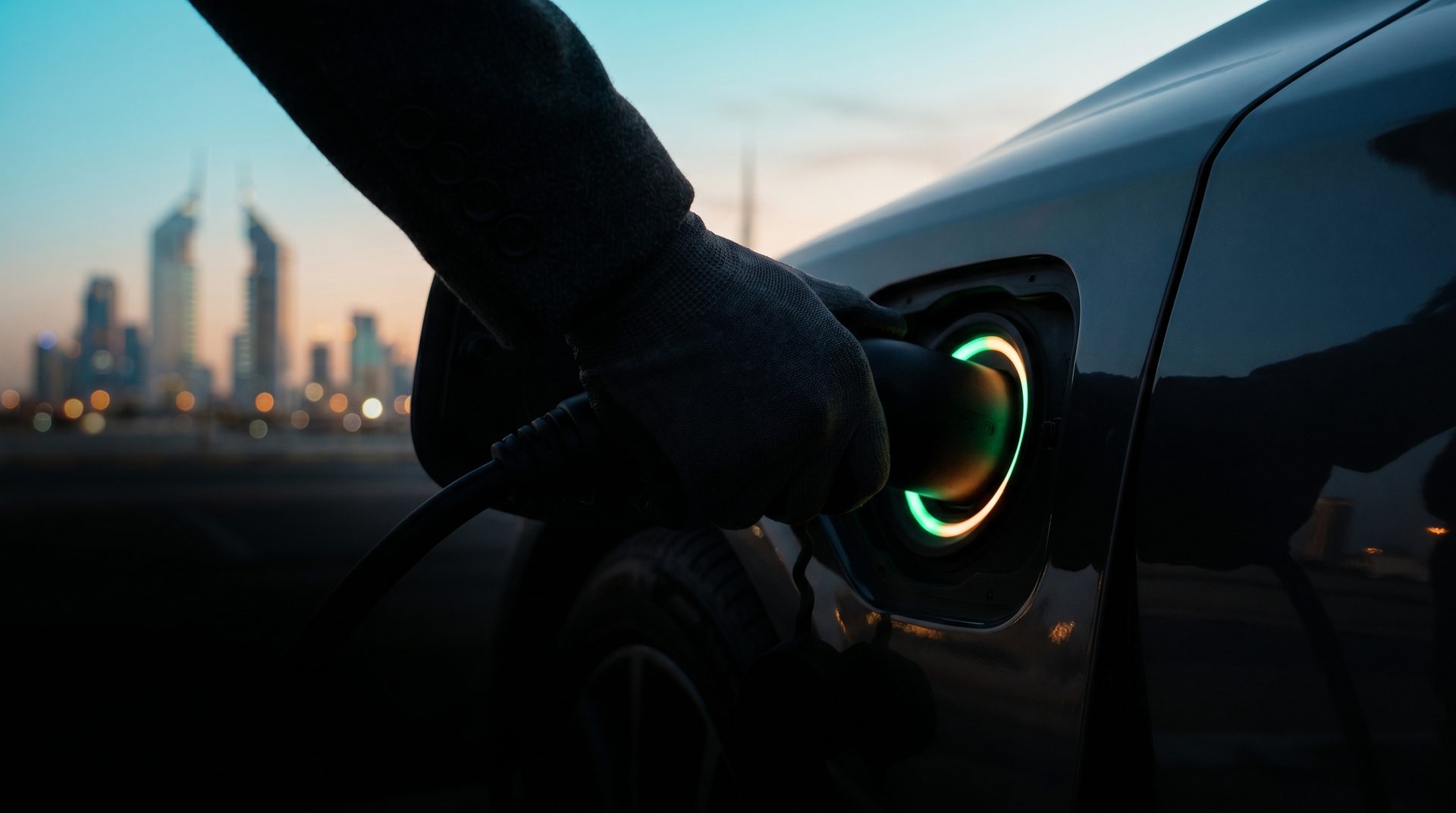
Short answer: No — a passive plug-shape adapter is for AC charging only and must never be used to DC fast-charge. To charge a GB/T (China) EV on a UAE Type 2 socket safely, use a rated AC adapter such as the GB/T to Type 2 (32A / 22kW). DC fast charging needs an active, certified adapter that not every car supports.
What is the difference between a passive and active adapter?
Adapters fall into two very different safety classes, and confusing them is the single most common mistake UAE EV owners make.
- Passive adapter — a plug-shape converter that simply re-wires one connector geometry to another. It carries AC power and the control-pilot signal, but adds no electronics. Passive adapters are AC charging only.
- Active adapter — contains electronics that translate the high-power DC communication protocol between the charger and the car. Only an active, certified unit can safely route DC fast charging — and only on cars that support it.
A passive GB/T-to-Type 2 adapter looks deceptively simple, and that is exactly why people assume it will also work on a DC fast charger. It will not. The plug may physically fit, but the car and charger never negotiate a safe DC session.
Never DC fast-charge through a passive plug adapter. A passive GB/T-to-Type 2 adapter is rated for AC only. Forcing high-power DC through it risks overheating, connector damage and a fire hazard. DC fast charging requires an active, certified adapter and a car that explicitly supports it.
How does the car decide it is safe to charge?
Every compliant EV charge cycle begins with a handshake. The charger and the car's onboard systems exchange signals over the control pilot before any current flows. For AC, the car's onboard charger sets the rate it can accept. For DC, the car and the station negotiate directly at high power, and the battery management system holds final control.
A passive adapter passes the AC pilot signal through unchanged, so AC negotiation still works — which is why a rated AC adapter is safe. But a passive adapter has no electronics to manage the DC protocol, so a DC session simply cannot be conducted safely through it. This is a protocol limit, not just a plug-shape limit.
AC-only vs DC limits: what each adapter can do
| Adapter | AC charging | DC fast charging | Notes |
|---|---|---|---|
| Passive plug adapter (e.g. GB/T to Type 2) | AC up to its rating | No / unsafe | Plug-shape only, no electronics |
| Active certified DC adapter (e.g. CCS2/Type 2 to Tesla US) | AC | verify per car | DC only if your car supports it |
| Charging cable (Type 2 to Type 1 / Tesla) | AC | No / unsafe | AC cable, not a DC solution |
| No adapter (GCC-dealer Type 2 / CCS2 car) | Yes — native | Yes — native | Officially-imported EVs plug in directly |
UAE public networks — DEWA Green Charger in Dubai, Charge AD / ADDC with TAQA and E2GO in Abu Dhabi, ADNOC Distribution, mall chargers and Tesla Superchargers — use Type 2 for AC and CCS2 for DC. GB/T (China) and US-Tesla NACS connectors are not present on UAE public chargers, which is precisely why grey-import owners need the right adapter for AC.
Certification marks and weather rating to look for
An adapter sits between a high-power supply and your car, outdoors, in UAE heat. Certification is not a marketing badge — it is your evidence the unit was tested for current rating, insulation and thermal safety. Before you buy, look for:
- CCC — China Compulsory Certification, relevant for GB/T-side equipment.
- CE — European conformity marking for electrical safety.
- TÜV — independent third-party test certification.
- Weather rating IP54 or better — protection against dust and splashing water for outdoor charging.
Match the adapter to the station power. Charge at or below the adapter's rated current. A 32A / 22kW adapter must not be pushed harder than its rating, even if the station can deliver more. The slowest-rated component sets the safe ceiling.
Check your inlet first — before buying anything
GB/T and Type 2 inlets look similar but are not interchangeable. Buying by car badge alone is risky, because the same model can be a GCC-dealer car (Type 2 / CCS2, no adapter) or a grey China-import (GB/T, adapter needed). The only reliable check is your own car's charging port.
Physically inspect your charging inlet before you order. Open the charge flap and compare it to a GB/T, Type 2 and CCS2 reference image. GB/T resembles Type 2 but is not compatible. If you are unsure, photograph the inlet and confirm before buying — verify your inlet rather than guess.
Who actually needs an adapter in the UAE?
- Officially-imported EVs (GCC-dealer BYD, Hyundai, Kia, GCC Tesla) are Type 2 + CCS2 — no adapter needed.
- Grey China-import EVs (some BYD including "Leopard"/Fangchengbao, Chery iCar 03, Jetour, ROX 01, China-spec VW ID.4/ID.6) are GB/T — need a Type 2-to-GB/T adapter for AC. Verify your own inlet.
- US grey-import Tesla / Cybertruck are NACS — need a CCS2/Type 2-to-Tesla (US) adapter.
The safe, rated AC adapter for a GB/T car
For charging a GB/T (China-import) EV on a UAE Type 2 AC charger, this is the certified passive AC unit — AC only, never for DC.
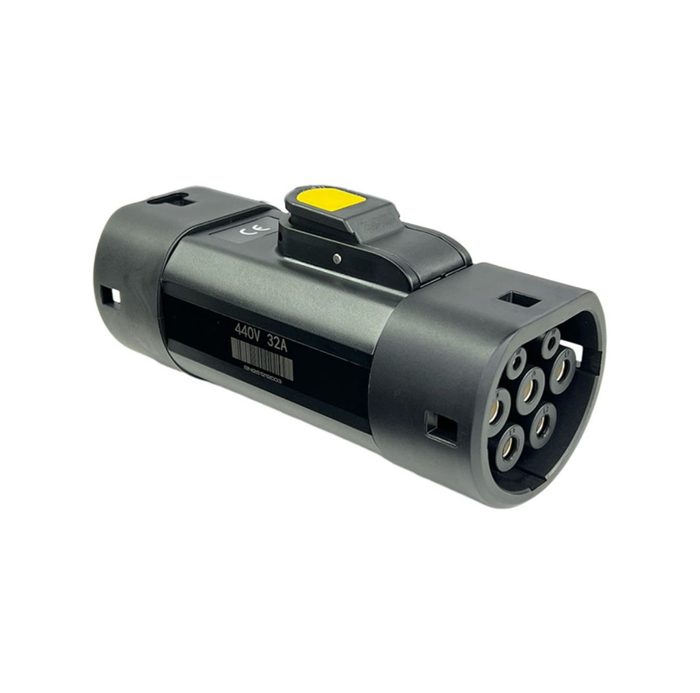
GB/T to Type 2 Adapter
Passive AC, 32A / 22kW 3-phase — charge a GB/T car on a UAE Type 2 charger
250 AED
View productCCS2 / Type 2 to Tesla US Adapter
Active adapter for US-import Tesla & Cybertruck (NACS); DC up to 250kW / AC up to 80kW
400 AED Out of stock
View productRelated: GB/T adapter AC vs DC safety · Chinese EV charging adapter (UAE) · EV charging adapters hub
Frequently asked questions
Is it safe to fast-charge my Chinese EV with a GB/T adapter?
No. A passive GB/T-to-Type 2 adapter is rated for AC charging only and must never be used for DC fast charging — the plug may fit, but the car and charger cannot negotiate a safe DC session. DC fast charging requires an active, certified adapter and a car that explicitly supports it.
What is the difference between a passive and an active EV adapter?
A passive adapter is a plug-shape converter with no electronics — it carries AC power and the pilot signal, so it is AC-only. An active adapter contains electronics that translate the DC communication protocol between charger and car, which is what makes safe DC fast charging possible on supported vehicles.
Which certification marks should an EV adapter have?
Look for recognised safety certification such as CCC (China Compulsory Certification), CE (European conformity) and TUV (independent third-party testing), plus an outdoor weather rating of IP54 or better. These marks indicate the unit was tested for current rating, insulation and thermal safety — essential for charging in UAE heat.
Do all UAE EVs need a charging adapter?
No. Officially-imported GCC-dealer EVs — including BYD, Hyundai, Kia and GCC Tesla — use Type 2 and CCS2 and plug into UAE public chargers directly, with no adapter needed. Only grey/parallel imports with GB/T (China) or NACS (US Tesla) connectors require an adapter for AC charging.
How do I check whether my car needs a GB/T adapter?
Open your charge flap and physically inspect the inlet, then compare it against GB/T, Type 2 and CCS2 reference images. GB/T looks similar to Type 2 but is not interchangeable, and the same model can be GCC-spec or China-spec. Never rely on the badge — verify your own inlet before buying.
Can I use a passive adapter at a DEWA or Tesla Supercharger DC point?
Not for DC. UAE DC fast chargers use CCS2, and a passive plug adapter cannot conduct DC safely. You can use a rated passive adapter only on Type 2 AC sockets. For DC, you need an active, certified adapter that is compatible with both the station and your specific car.